
You may have heard it before: a distinctive, loud, almost obnoxious sound while machining: chatter. Or perhaps, if you haven’t heard it, you’ve seen the telltale sign: chatter marks, odd wave-like patterns, and other surface flaws left by vibrating tools.
Both are signs of machine chatter, which can cause flaws in finished pieces and be destructive enough to break tools. Here’s what you need to know.
What Is Machine Chatter?
Machine chatter, also known as CNC chatter or simply as chatter, refers to unwanted vibrations that occur while machining.
Chatter can be either resonant or non-resonant. Non-resonant chatter is often constant, typically caused by a worn tool, and readily diagnosable and rectifiable.
Resonant chatter can be much more serious. This is caused when the machine operator reaches the resonant frequency of the tool and machine. Resonant chatter is usually very loud and when not addressed can be very destructive.
Machine chatter is not only undesirable because it can leave unwanted marks on the finish of the material being machined. It can also accelerate tool wear, shortening tool life, and can cause unexpected tool breakage during operation.
Some machine operators instinctively respond by reducing running speeds and feed rates when they encounter machine chatter. While this can stop the issue in the short run, it does not always address the causes.
Understanding the causes can help you rectify the issue at the source.
Strategy and Work Holding
The course the tool takes through a material, as well as the running speed, force applied, and depth can also produce chatter while machining.
Adjusting the course the tool takes, along with the running speed and depth, can all impact whether or not chatter is produced. So can spindle speed; if resonant chatter occurs, try increasing or decreasing the spindle speed in small increments to alleviate the problem.
Work holding can also cause chatter. Using the wrong size holder, uneven clamping pressure, and even insufficient holding pressure can cause chattering if the workpiece vibrates within the holder.
Be sure to use a holder that is large enough and can apply even, adequate holding force to the material in order to prevent or minimize vibrations.
Tooling Solutions
The tool itself can also cause machine chattering (both resonant and non-resonant). All things being equal, longer, thinner tools will vibrate more readily than shorter, thicker ones. Use one of appropriate dimensions considering the job, and if possible, reduce the amount of tool that protrudes from the tool holder.
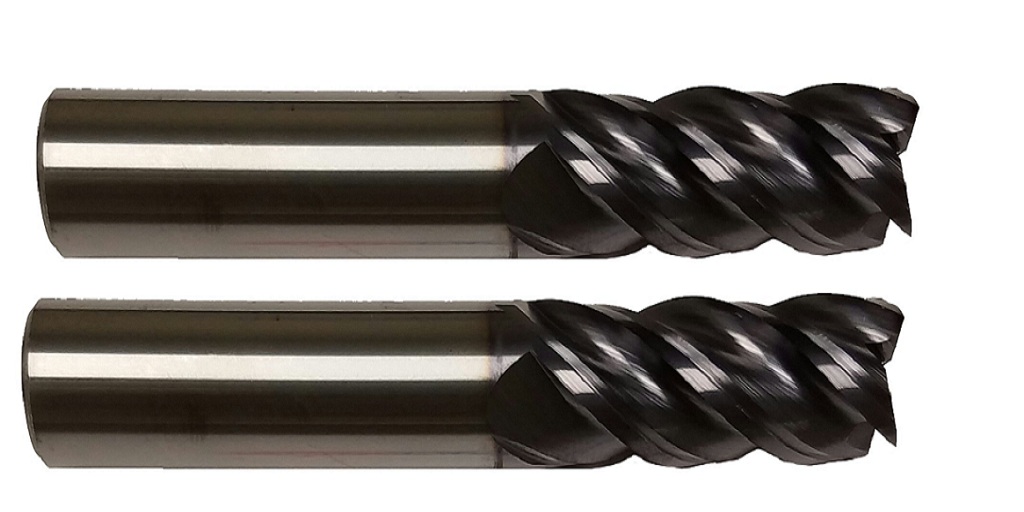
Flute count and orientation can also produce chatter. Generally speaking, the more flutes a cutting tool has, the more likely it will be to vibrate excessively. Also, consistent flute angles can achieve and maintain resonant frequencies easily; this makes variable flute end mills another potential solution.
Variable flute end mills have flutes that are spaced unequally, making it difficult for the tool to achieve its resonant frequency, which can dampen vibrations and reduce chatter and harmonics. Flutes with a variable helix design also have longer reach, making it possible to run variable flute end mills at greater depths and higher speeds with less chance of damage due to vibrations.
High-Quality Cutting Tools at Great Prices
Convinced your chattering issue is resonant and caused by the cutting tool? Invest in high-quality, high-performance, solid-carbide, American-made CNC cutting tools (including variable flute end mills) at Online Carbide (OnlineCarbide.com).
They offer great prices and orders over $250 ship free. Visit their website to find a tool or for additional details.
