
There are a lot of potential sources for pollution found in tap water that cause a variety of health issues. That’s why it’s so important for homeowners to have their own filtration systems.
A sophisticated purification procedure eliminates bacteria and dissolved contaminants from water before it may be safely consumed. Make sure that before you buy RO water purifiers for your home you examine the characteristics of each model as well as their brand, maintenance, and most significantly, the cost of each model.
There are now a variety of water purifiers on the market. They all have their unique selling points, yet all promise to provide the highest water quality. However, it’s important to remember that every water purifier has its own unique set of technical standards and minimum needs.
Take a look at our information on how to pick before you decide to buy an RO water purifier that is excellent for home use if you are unclear about which one to opt for.
What to Look for When Buying a Water Purifier for the House?
Many water purifiers may be found online, however, the following factors will help you choose the finest water purifier for your house.
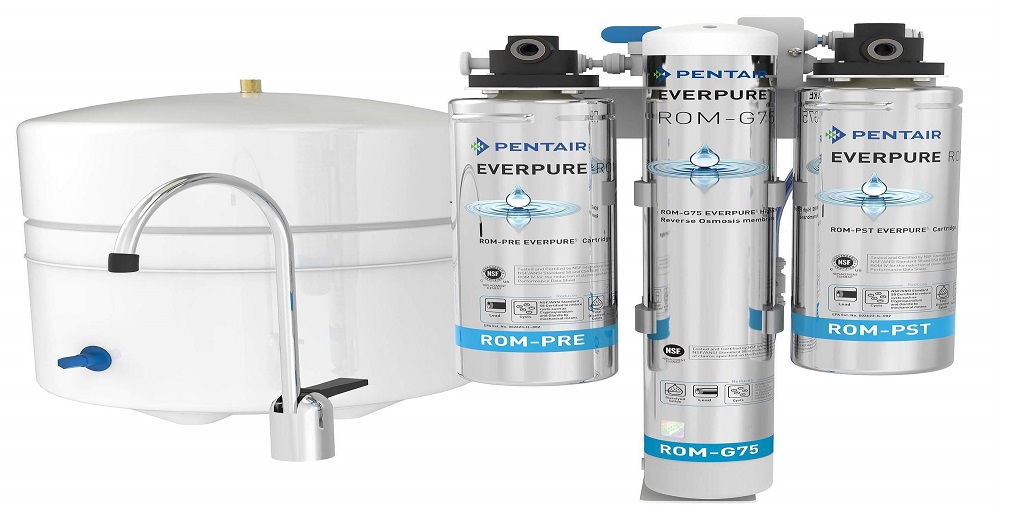
R.O. Water Purification System
A semipermeable membrane is used to filter out dissolved solids through this water purification device. Consequently, only extreme small things like water molecules may cross the barrier, leaving behind the salts and other contaminants that have been dissolved in the water.
This means that RO filtered water is devoid of germs and other impurities that could affect your health.
Ultraviolet Water Purification
UV (Ultraviolet) rays are utilized in UV water filter systems to destroy hazardous microorganisms in the water. Thus, the water is free of any germs. Health benefits of using a UV water filter include the elimination of unwanted microorganisms from the water without altering its flavor.
Which is the superior choice?
Before making a purchase, you should weigh the pros and disadvantages of both RO and UV water purifiers before deciding which is best for your needs. The following are the main distinctions between the two filtering systems.
The UV filter removes all pathogens in the water, however, the dead bacteria are left floating about in the liquid after the filter. A RO water purifier, on the other hand, kills germs and removes their floating corpses. This means that RO filtered water is more sanitary than other types of drinking water.
It is possible to eliminate dissolved salts and chemicals from RO water purifiers. Dissolved solids can’t be removed from water by UV water filters, which is a significant major drawback.
Consequently, RO systems are more successful at filtering tap water since bacteria and viruses are not the main contaminant. Your health might be negatively impacted by heavy metals and other hazardous chemicals found in water.
Because of the pre-filtration technology included in RO purifiers, they can handle a wide variety of contaminants, including filtering cloudy water. However, UV filters are ineffective in murky water. Bacteria can only be killed successfully if the water is clear. As a result, UV filters may not be a viable solution in locations with significant levels of turbidity in the water.
Have you made up your mind to buy an RO water purifier yet? You can get a large variety of water purifiers at efilters.net including quality RO systems like the ROM IV. Visit their website and start enjoying the ability to enjoy freshly filtered water on demand.
