
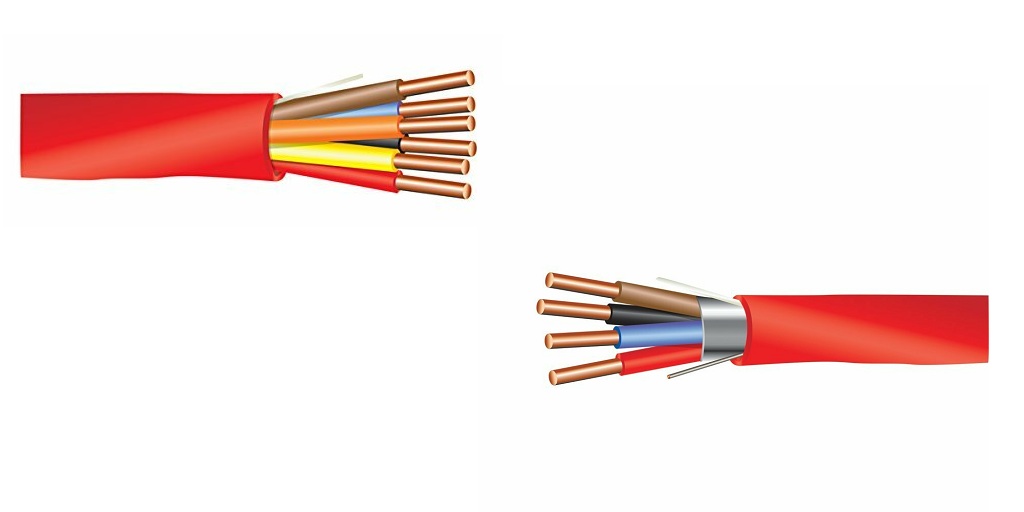
Fire alarm cable is of the utmost importance to public safety, as it allows the different nodes within a fire alarm system to communicate. If there’s a problem with the wiring and the system can’t communicate, it can’t relay important information about heat, smoke detection, or carbon monoxide to other nodes, smoke detectors, or alarms in the system.
Talk to any civil or electrical engineer about that and they’ll concur. That’s why all of the minute details associated with wiring should be understood – thoroughly understood – before attempting to complete plans or install wiring.
With that in mind, let’s take a closer look at two important fire alarm cable ratings – for riser-rated and plenum-rated cables.
What Is Riser Space?
Riser space, as the name might suggest, allows for utilities to “rise” through a building. That is, it is the vertical space reserved for things like communication lines, water pipes, conduits, and of course, alarm cables, to be vertically distributed throughout a building.
Think of riser space as the “space between the walls” because, in most instances, that’s exactly what it is. It’s also typically sealed off to access from the inside.
As a result, riser-rated cables are typically built to lower or less stringent specifications than plenum-rated cables, but this is not always the case (see below).
What Is Plenum Space?
Plenum space, unlike riser space, is space that is hollowed out between the floor and the ground, or more commonly, between a drop ceiling and the actual ceiling. While plenum space can also be used for water pipes and conduits, it is also the space in a building that is reserved for ductwork and HVAC.
As a result, it is possible for the contents of the plenum space to communicate with the rest of the building. That is to say, if there were, for instance, smoke in the plenum space, it could get into the living quarters of the associated floor.
Consequently, plenum-rated fire alarm cables (and other cables) must be much more resilient to heat and fire than riser-rated cable.
How Does This Affect Fire Alarm Cable?
Since fire alarm cable must be safe for use around people and also resilient to fire in order to work, this has some implications for alarm cable specifications.
Generally speaking, all fire alarm cables should be high heat resistant, self extinguish, and not produce toxic smoke when burned. However, pllenum-rated cable must be more resistant to heat and fire than riser-rated cable because of the nature of plenum space. As a rule, you can use plenum-rated cable in riser space but not a riser-rated cable in plenum space.
Also, one thing to keep in mind is that there are also riser and plenum-rated conduits. If you use a plenum-rated conduit, it may be possible for you to use riser rated cable – but check with an electrical engineer to be sure.
Looking for Fire Alarm Cable?
Looking for a non-power limited or power-limited fire alarm cable that stands up to specific requirements? Visit EWCS Wire at EWCSWire.com or get in touch with them to learn more about their high-quality alarm cables and other products.
