
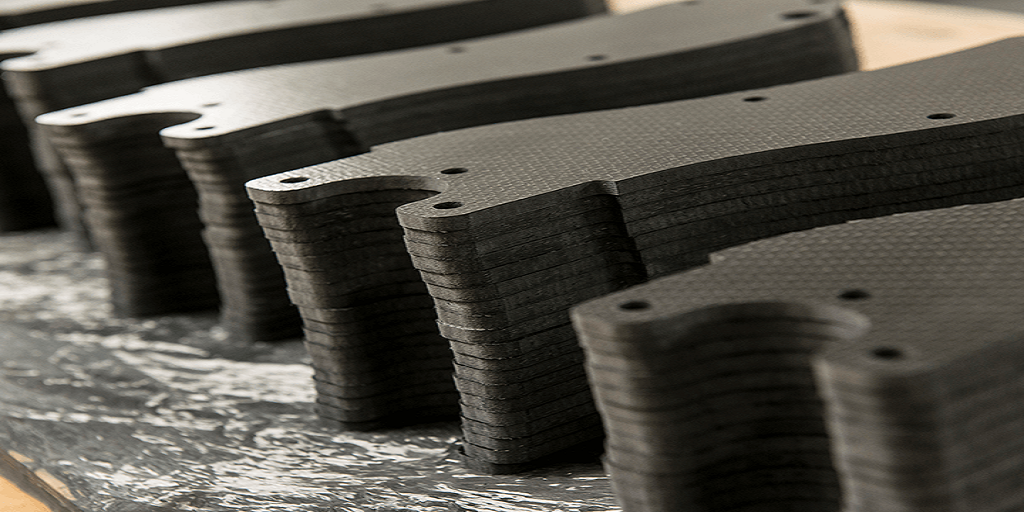
Carbon fiber is a high-performance material with unique features and properties that make it incredibly versatile and valuable. Today, there are many uses for molded carbon fiber parts: from automotive and aerospace applications to resistant and decorative everyday-use items.
However, even when we can find seemingly endless uses for carbon fiber, the material isn’t as omnipresent as one would expect. This has a lot to do with the fact that carbon fiber manufacturing is a resource-intensive process, especially if you want to guarantee quality end-products.
Let’s take a quick look at the most common molded carbon fiber parts manufacturing methods.
Manual Laminating
The manual laminating method is the most low-tech way to make molded carbon fiber parts. It is also the most expensive one since it requires a lot of time and manpower.
This method involves layering sheets of carbon fiber fabric by hand and saturating them with resin. Once all the layers are in place, the laminate is placed in a mold, and pressure is applied. After the resin cures, the part is removed from the mold.
Because this process is so labor-intensive, it’s mostly used for high-end applications where precision and quality are essential.
Vacuum Bagging
The vacuum bagging method is a slightly more sophisticated way to make molded carbon fiber parts.
This method also involves layering sheets of carbon fiber fabric and saturating them with resin. However, instead of using a mold, the layers are placed in a bag. The bag is then sealed and put under vacuum. This removes all the air bubbles from the laminate and creates a strong bond between the layers. Once the resin cures, the part is removed from the bag.
This method is often used for composite parts that need to be very strong and lightweight, such as those used in aerospace applications.
Resin Infusion
The resin infusion method is a more high-tech way to make molded carbon fiber parts.
This method involves building a mold around a metal or plastic mandrel. The mandrel is then removed, leaving a cavity in the mold that’s exactly the shape of the finished part.
Next, the carbon fiber fabric is laid into the mold and saturated with resin. The fabric is then placed in a vacuum-sealed bag, just like in the vacuum bagging method. However, instead of applying pressure, the bag is heated until the resin cures.
This method is often used for high-volume parts that need to be strong and lightweight.
RTM
Resin Transfer Molding, or RTM, is a variation of the resin infusion method.
RTM involves saturating the carbon fiber fabric with resin before it’s placed in the mold. The saturated fabric is then placed in the mold and put under pressure. This forces the resin into the cavity, where it cures.
This method is often used for parts that need to be very strong and have a very tight tolerance.
Pultrusion
Pultrusion is a continuous process that’s often used to make carbon fiber parts with complex shapes.
This method involves pulling a bundle of carbon fibers through a die. The fibers are then saturated with resin and cured. The finished part is then cut to size.
This method is often used for parts that need to be strong and lightweight, such as those used in aerospace applications.
Now that you have a basic understanding of the most common molded carbon fiber parts manufacturing methods, you can start to see why carbon fiber is so versatile and valuable. With the right manufacturing process, carbon fiber can be turned into almost anything.
However, you need the right raw materials to make sure your molded carbon fiber parts comply with the highest performance standards. Protech Composite is the best carbon fiber manufacturer today, providing top-quality carbon fiber sheets and panels for every industry and purpose. Visit their website or contact them today to find out more about their high-performance carbon fiber products.
