
Some areas of the United States are better suited to harvested solar energy than others, but nonetheless, about 2.8% of the electricity produced in the country is solar, and that number is likely growing.
Recent advances in technology have made it possible for homeowners to invest in their own solar systems; some companies will even install systems with the promise of paying for the system and maintenance with the stipulation that the homeowner offers back any excess power produced.
For homeowners and electricians looking at the prospect of establishing a solar system in a residential or commercial setting, the success of the system will hinge on some highly specialized
What Are the Components of a Solar Power System?
Even the most rudimentary solar systems consist of at least two main components:
● Solar panels: These panels actually capture solar energy
● Inverter: The power inverter is an electrical device that switches the direct current captured by the panels to AC, or alternating current, which is used to power domestic appliances.
Some systems, specifically off-grid systems, also contain a battery bank and a charge controller. If a system is not connected to the electrical grid, which can absorb excess energy, it must be stored in a series of batteries. The charge controller helps protect the batteries against overcharging.
Why Is It Called Solar Panel Cable? How Is It Different from “Regular” Cables?
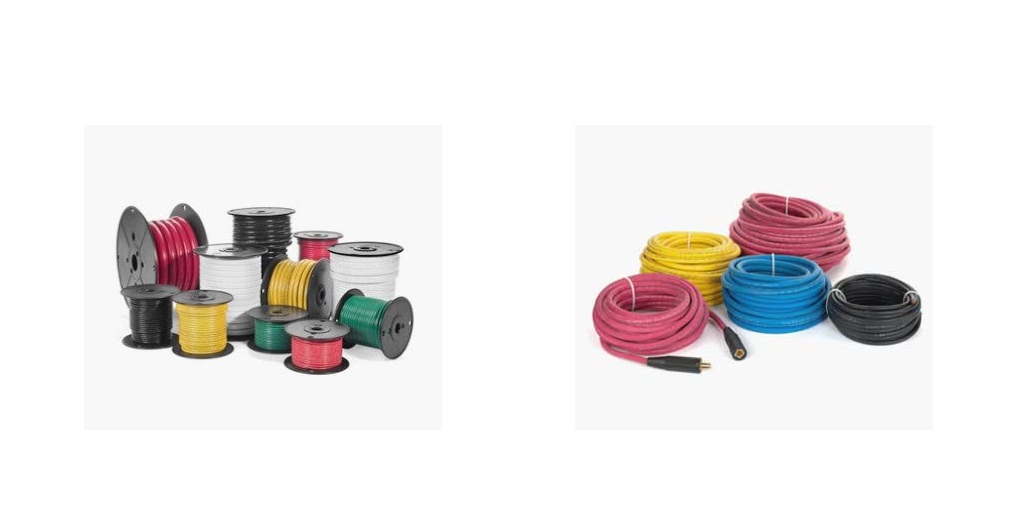
Solar panel cable, also known as photovoltaic (PV) cable or wire, is a special type of conductor that is used to connect the panels of a solar energy system, and to connect them to the inverter.
Because these cables must be used outdoors, in the elements, and must be necessarily be carrying high voltage, they must be manufactured to a specific par. Notably, PV cable is typically created with UV-resistant insulation. They are also often made with weatherproof, moisture-proof, ozone-resistant insulation.
It is also vital to use the right size solar panel cable in a solar array, in order to meet code and protect against overheating and potential loss of energy. The longer the array, the larger the cables must be to protect against these latter two factors.
Does Solar Panel Cable Need to Be Shielded?
Shielding is a form of metallic insulation that protects the signals carried by wire and cable. AS solar panel cable’s primary responsibility is carrying significant loads of energy, but not sensitive signals associated with data, the NEC allows solar PV cable to be direct-buried without requiring it to be shielded. However, every case is different and it might be beneficial to purchase shielded cable or provide a level of protection in another form, such as through conduit.
Does Solar PV Cable Require the Protection of Conduit?
Due to the large lengths of wire and cable typically used in solar panel arrays, cable management can be a concern. As a result, PV wires are typically protected by a conduit from the course they run from the solar panels to the inverter and from the inverter to the service panel.
However, it can be impractical to run PV wires through conduit between solar panel cables, in which case cable trays (for which many PV wires are rated) or even zip ties can be used for cable management.
Where Can I Get High-Quality Solar Panel Cable?
If you’re looking for high-quality solar panel cable for the purpose of wiring solar panels or you simply would like to learn more about solar energy, visit EWCS Wire at EWCSWire.com.
They carry a wide range of highly specialized electrical conductors, including marine-grade battery wire, welding cable, armored cable, submersible cable, instrumentation and alarm cable, and general building wire in addition to PV cable.
Check out their product line at the address above and get in touch with them directly if you need assistance at Sales@EWCSWire.com or at 800-262-1598.

