
I´m not one to go to church every week. I am a firm believer that my relationship with God is between Him and me, and attending service with others is not going to improve that relationship, or at least not the way I would like to improve it.
However, this got me thinking about the significance of all the elements we normally see during service. How people dress once a week and the meaning of the different pieces of clothes worn by our pastor, this all had to have a meaning. If not, what’s the point?
After all, God only cares about our actions on earth and no amount of clothes are going to hide our intentions from him. Right?
As it often happens, these questions never seemed to leave my head. They got seared into my brain and could not stop wondering about the significance of ritual clothing, or even all the elements we often see during the eucharist.
So I decided to consult a neighboring clothing store that happens to specialize in liturgical apparel called Divinity Clergy Wear. They were kind enough to show me around and explain what each part of a pastor vestment meant.
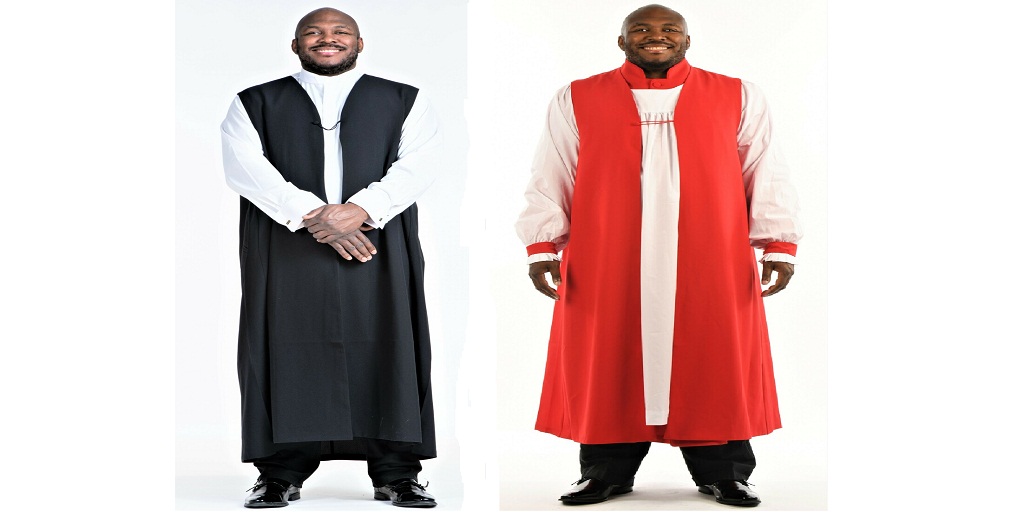
First, I learned that the Roman Cassock, the long black robe with a long row of buttons from the neck down, was part of what they call “clericals”. These serve a double purpose; they are considered informal or streetwear and can be used anywhere. However, its use changes during service as it is technically an undergarment to be worn below regular pastor vestments.
It is said that the cassock was the natural evolution of the Roman planeta. The planeta was a sleeved tunic that replaced the overly complicated togas. They were delicately crafted and considered costly, even for church officials. However, the Cassock was modeled after it yet retained a dignified simplicity that is still seen today.
The preferred clergy garment, or the most visible one, is the surplice. This is the white long and ample robe worn on top of the cassock. It is reminiscent of the ancient alb, and some denominations still refer to it by that name. However, it does not reach the ankles and it is usually long-sleeved. It represents the purity of baptism and it is one of the oldest official vestments worn by church officials.
The next piece of cloth is the cincture. This traditionally served as a girdle to adjust the flowing alb or surplice. It must match the color of the cassock and remain plain and unadorned.
On top of the surplice, pastors usually wear their tippet, a long rectangular scarf that falls freely down to the knees and also matches the cassock and cincture in color. Tippets descend directly from roman oraria, which were long pieces of cloth used by priests to wipe their faces or even as a bandage. During early Roman times, it was worn over the left shoulder and secured at the hip under a girdle.
Other circles also adopted the orarium as part of their official vestments. Such is the case of academic and judicial communities and stoles. However, tippets are different from stoles as they remain plain and unadorned.
However, these are considered formalities and do not explain why these must be worn. The answer to this was both puzzling and simple.
Wearing vestments shows a commitment to our faith as Christians. In a world where secularism advances an inch every day, retaining our traditions and daring to be public about it is the most liberating feeling one can experience nowadays.
I appreciate Divinity Clergy Wear representatives for being so kind as to explain these facts so clearly and showing me extremely well-crafted examples of each element. I recommend visiting their store in Hamilton, NJ, or browsing through their website to find out more about their pastor vestments and religious garments.
