
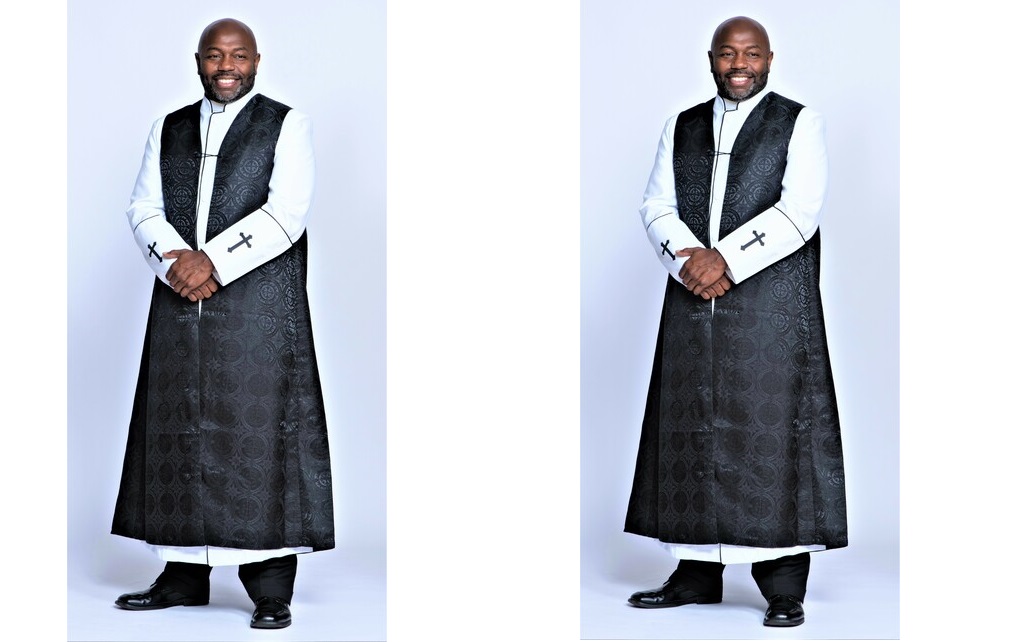
The chimere, like the chasuble, cincture, tippet, and amice, is one of those little-known clergy vestments with a relatively obscure origin that, like many other vestments, was likely not ecclesiastical.
Let’s take a closer look at this unique vestment that is somewhat specific to the Anglican church, what it is, where it came from, and why it’s worn.
What Is a Chimere?
A chimere is a lot like other preaching robes and is often brightly colored. It is long, reaching to just above the ankles, but it differs from other clergy robes in a few aspects.
One is that these garments, though often brightly colored, is rarely ornately embroidered or decorated. It also notably lacks sleeves. In this manner, it is somewhat like a long vest.
Typically the chimere appears in black or red and is made from either silk or satin. It is usually worn open at the front and gathered at the back, containing nothing more than slits for the arms.
They are customarily worn in concert with (and over the top of) a rochet, as a part of Anglican clergy attire (see below).
Where Did the Chimere Come from?
It is believed that modern chimeres originated in the form of a riding cloak and evolved over the centuries to take their modern form in the ranks of the clergy (you don’t see many riders if any still sporting a chimere while out in the field!).
Although modern chimeres are typically made from satin or silk, it is believed they came into English from the French simarre (Old French Chamarre). It may have an etymological relative in the Spanish word “zamarra,” a word for an outer garment made of sheepskin.
Incidentally, the modern word may trace its linguistic origins back to a Greek word, “chéimerios,” for “wintry,” which bolsters the theory that it may have originated from a Spanish word for a winter coat.
Linguistic origins aside, it is widely believed that the modern chimere evolved from a medieval cloak known as a tabard, a warm outer cloak worn for warmth and protection from the elements. Over the centuries, the tabard lost its sleeves and became more ceremonial rather than functional, evolving into the chimere recognized by clerics and churchgoers.
Who Wears Chimeres?
Nowadays, the chimere is mostly relegated to use within the Anglican church, where it has become an accepted addition to the choir habit of Anglican bishops.
It is worn in conjunction with the rochet. Often, Anglican bishops will pair the rochet and chimere with a purple cassock. The rochet would lay over the cassock and the chimere over the rochet, in that order; the choir dress is completed with the addition of a tippet, which is very like a stole, only typically less formally arrayed.
Because of its prevalence in the Anglican church, occasionally purple chimeres may be encountered in addition to black and red ones. In some settings, it is acceptable for lead choristers to wear a chimere while in choir dress.
Where Can I Get a Chimere?
You can still purchase high-quality clerical vestments like chimeres, rochets, tippets, and cassocks, provided you know where to look.
One online vendor that sells a wide range of unique, high-quality clerical vestments, clergy shirts, and accessories is Divinity Clergy Wear. Check out their website, DivinityClergyWear.com, or contact their customer service team at 877-453-3535.
You can also visit them in their showroom to learn more about the different garments they sell. Conveniently located in Hamilton, NJ, about halfway between New York and Philadelphia, their showroom is open Monday through Friday from 10 AM to 5 PM EST and Saturday and Sunday by appointment.
