
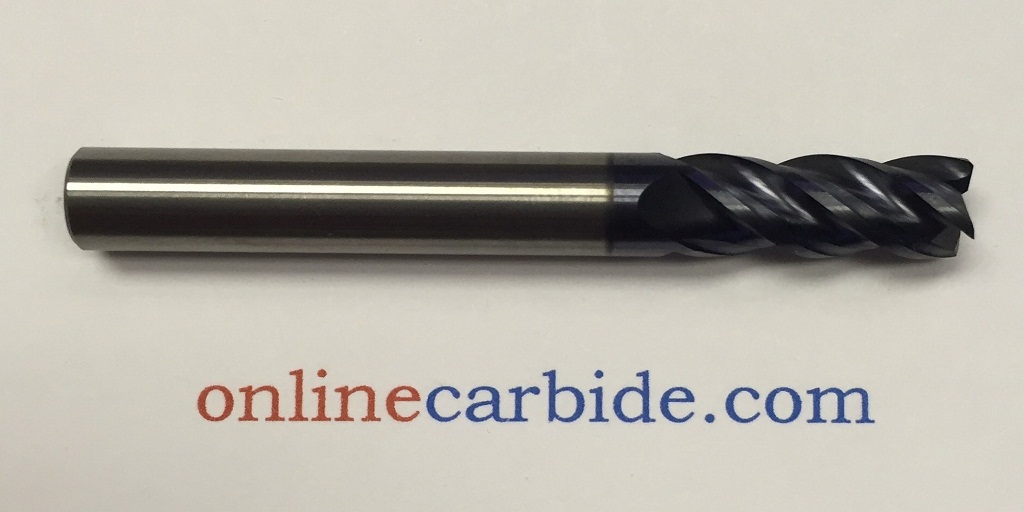
More than a decade ago, some outlets specialized in covering the world of machining and manufacturing started to notice how many tooling companies were adopting variable flutes as a way to improve productivity and reduce chatter. This has driven many machinists to delve a bit deeper into the matter and find out if variable flute end mills really were the holy grail.
Chatter, the act of an end mill taking on a life of its own due to resonance caused by unbalanced forces acting upon it, is bad for both machines and machinists. It also comes with an ear splitting sound that can be very unpleasant.
When chatter happens, you can expect poor surface finish, broken tooling, or worse.
What’s interesting about this phenomenon is that it becomes less likely for this to happen when you’re using a variable flute end mill.
The reason for that is that the spacing on variable cutting tools help increase the tool’s resilience and reduce chatter-related vibrations.
The idea is that you’re throwing off internal vibrations with the uneven cutting forces to avoid chatter and increase productivity. This has led to a true arms race between tool manufacturers who want to find the perfect end mill design that fights chatter while offering improved longevity.
Whether you’re already using tools like these or not, the simple fact is that these machining technologies are becoming more popular. Innovations like variable end mill design are helping to make tools that operate more efficiently and last longer.
When you combine this with the fact that today’s CNC machines are also evolving, you’re in for some interesting times over the next few years. For now, let’s look at why chatter happens in the first place and how it can be mitigated with variable flute end mills.
Chatter, the Floating Tool
When a tool is brought into contact with a workpiece at high speeds, chatter can happen. While we may think about end mills as rigid and inflexible, they bend and vibrate at high speeds just like any other material.
In this case, the tool tries to take on a life of its own as it bounces up and down against the material being worked upon. This can cause your part to have a poor surface finish and can even damage your tool, not to mention how it can damage your hearing.
The good news is that a properly designed end mill should take on the brunt of these forces and reduce or eliminate chatter.
This is where variable flute end mills come into play, as their flutes are designed to lessen any vibrations that can cause chatter. This way you get a much steadier cut, resulting in a uniform finish and better tool life. To get the most out of variable flute end mills it is important to get one with optimized geometry and, of course, rigid tooling materials such as carbide.
Fortunately, tool manufacturers like Online Carbide are constantly innovating the field of tool design and implementing variable flute designs to their end mills. Right now, you can get a constant supply of high-end carbide tools manufactured here in the United States for very competitive prices. They are designed to reduce chatter and improve productivity.
