
You might have heard many say that graphics don’t make a game good. This is, of course, true in many senses. Many gorgeous games are quite forgettable (or right out unplayable), and some 8-bit style games are endearing and commercially successful. And then there is everything in between.
However, many games are built with high-end gaming systems in mind and demand a lot from your machine to really shine. A poorly optimized PC will make the game feel entirely different and even impact your ability to become a skilled player.
I have heard fellow gamers solemnly assert that 60 frames per second are all you need to enjoy a game. It might be true for graphic adventures and slow-paced strategy or turn-based games. But when response time and precision matter, the amount of frames per second your rig can dish out becomes incredibly important.
A piece of advice: if you want to become competitive avoid the latency trap at all costs. 60 frames (and hertz from your monitor) are proven to be the worst scenario for gamers. You get delay on two fronts: delay between the game state and what’s being actually shown on screen. The slow rendering means that when you take the shot, your target is already in a different spot. Plus, your reaction will also be delayed by this cap as it takes time for your graphic card to process your input and show it on your monitor. This results in the all-familiar floaty aiming we all hate.
Of course, we have to be transparent. Many pro gamers are incredibly good even when capped at 60/60. The reason is that their brains are trained to enter this delay in their synaptic calculations. In other words, they quickly figure out how much delay they have and adapt their game accordingly. But that does not mean they don’t notice the difference. When they jump from 60 to 144 or anything beyond 200 FPS, they recognize it gets noticeably easier to lock on target and take accurate shots.
In other words, more FPS means more information on target trajectory and speed, which reliably translates into more hits. Period.
Moreover, while pro gamers have an easier time adapting to unreliable or delayed information in their monitors (and delayed input signals), new gamers do feel the impact and find it more difficult to get proficient in a game that is capped at 60 FPS and hertz.
In layman terms: more FPS means faster progress in terms of skills.
And this is where our beloved cases come into play. When building a custom PC, they open a world of optimization options for better frames per second.
But some cases are better than others, right? We all agree some have more space which allows us to fit in higher-end components while others are more compact and offer less room for airflow…
This is where the mid-tower cases come into play. They offer a great balance between being compact enough to be easily moved around without compromising too much on specs and power, yet still offering plenty of room for advanced cooling systems to keep things stable when you are pushing your machine to the limit.
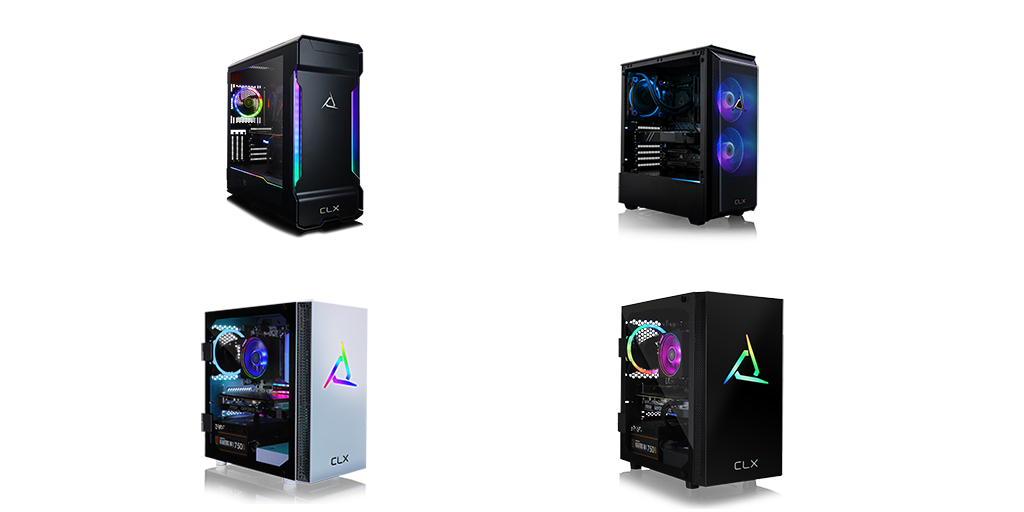
We happen to love the way CLX Gaming signature mid-tower cases are built. They take into account every aspect of computer craftsmanship. They make use of every space available for cable management, fan placement, cooling system configuration, and lighting. They are beautifully crafted and even offer automotive-grade paint jobs that take your gaming PC to a whole new level. Visit their online PC builder and start putting together a rig that allows you to get competitive faster.
