
Reverse osmosis water filtration systems have been around for quite some time now. They were devised as a way to provide submarine crews with drinking water during World War II. Engineers had to come up with a way to solve the problem of limited storage capacity inside a long tube surrounded by massive amounts of undrinkable water. So they used RO systems to filter out minerals and other contaminants from seawater, thus providing a freshwater source for sailors. Pretty awesome, if you ask me.
Today, this technology has been perfected and made available for households, and we can use it to get rid of those single-serving water bottles that are a pain to carry and are not that gentle with the environment.
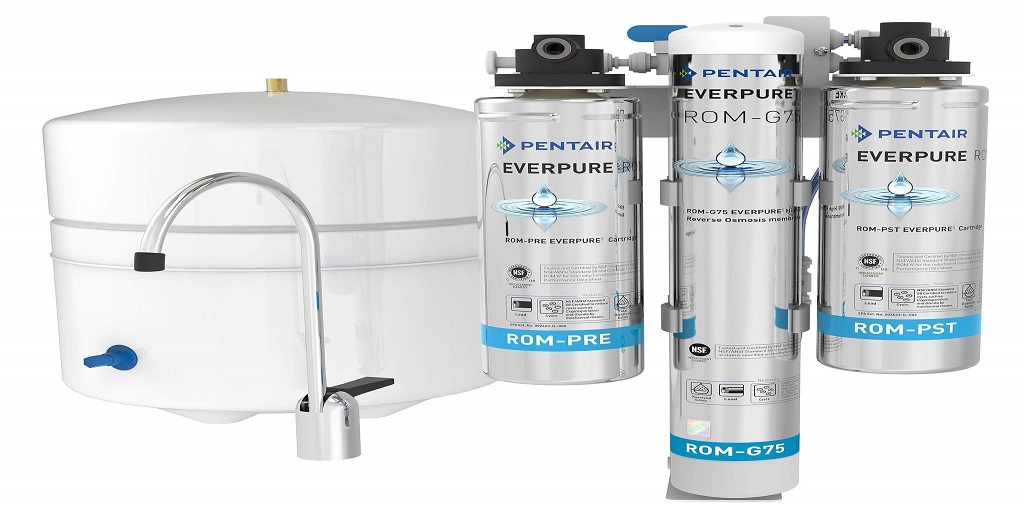
Your typical RO water purifier is a 4 stage filter where the water goes into different cartridges to remove different water pollutants or contaminants. The first one is a polypropylene 5 microns sediment filter that removes, you guessed it, sediments from the water. Then the water goes into two carbon filters that are in charge of cleansing the water and removing chemicals like chlorine if you are plugged into a municipal water source, or fertilizers or pesticides if you are connected to a well water source. The next stop is a membrane filter which looks like a tightly wound scroll that divides the low mineral content water from the high mineral content water. The last stop is your faucet or a delicious glass of clean water.
However, there are some considerations you must have before you buy RO water purifiers for your home or business.
Water source
Your RO system is going to be fed by the water that comes into your property. Municipality-treated water is not that bad at keeping bacteria at bay. However, inorganic dissolved solids and heavy metals tend to escape their system and go into the pipe, so you better get an efficient RO system to reduce their level.
Private wells are a whole new game as they extract water directly from subterranean currents. There is a potential for harmful bacteria and certain chemicals if the water is not treated properly, so you better make sure you give your water a reverse osmosis pass before drinking it or even coming into contact with it.
Water pressure
Without water pressure, water filters tend to work poorly. If your water pressure is below 40 PSI, you will first need to add some extra pressure before getting an RO system. That’s an easy fix, though. You can install a booster pump that’s powerful enough to give you enough PSI. Or, if your home is fed through a well water supply, make sure your storage tank is set high enough to provide the needed pressure. This is great advice even if you don’t have a water purifier. Having weak water pressure is never a good thing.
Water demand
The demand for water inside a household or business will always impact how your RO water purifier works to meet said demand. Always take into consideration the total water daily intake of your family or employees. Remember that an individual should drink half their weight in ounces of water every day.
Other factors that affect demand are ice machines or thru-door dispensers in refrigerators. Since RO water has an amazing taste, it is the best for mixing teas, beverages, juices, and even cooking.
If you are on the lookout to buy RO water purifier systems, it is always useful to understand these factors so you can get the right one that satisfies your needs. Visit efilters.net and talk to one of their water purification experts. They will guide you through the process of getting the right reverse osmosis system for your household or business.
