
There are many challenges a shop will be forced to face when trying to achieve higher performance and efficiency. Limitations such as speed rates, feed rates, temperatures, and cutting accuracy, always pose challenges that can be solved in many ways. However, once you have the right equipment, most of these factors can be overcome. Newer machines and spindles provide enough speed and grip to cross speed barriers without a problem, and carbide tools now allow us to worry less about temperature and tool integrity while focusing on feed rates and cut speeds. However, there is still one challenge high-performance machining faces that need a different approach.
There is nothing more unnerving than the loud sound of your tool violently hitting the piece you´re working on, producing that cringe-inducing chatter we all learn to hate.
Contrary to what most people think, this vibration is not produced because you approach the material too fast or bluntly. It is caused by waves of imperfection on the material walls left by your tool in previous passes. If your tool´s hit speeds perfectly match these waves, they start vibrating in perfect harmony as they get “in tune”, producing undesired chatter. This is the same effect exploited by old vinyl players, only a lot stronger and without the melodic element.
One way to reduce this chatter is finding the harmonic sweet spot of your material and staying below the harmonic speed. However, this limits the speed at which you want to operate your machine. If you are trying to push your efficiency to the next level, and increase the number of finished parts per day, you don’t want to be facing an insurmountable speed barrier, especially after investing in faster machines and new tools. Knowing you can make your tools spin a lot faster thanks to composite materials such as carbide but being forced to hold back can be a real mind-killer.
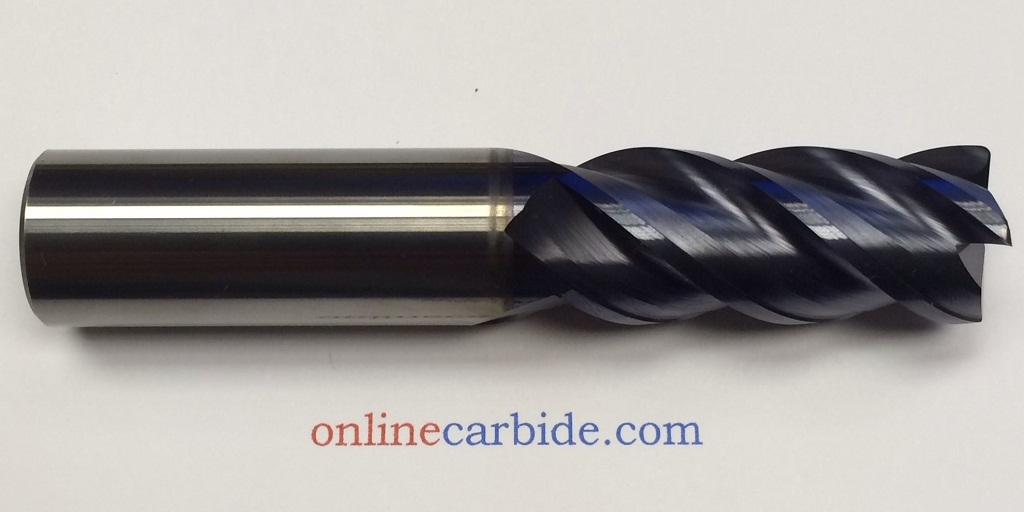
One other way to deal with this problem is to find a way to make your tool cutting surfaces uneven, so the hits per second rate never get tuned with your material´s harmonic vibrations. Variable end mills are made in such a way that their asymmetry prevents your tool from vibrating along with the material as you cut through it, completely reducing the chance of producing that familiar ear-splitting sound of chatter. Variable end mills are actually a combination of high helix angles with low helix angles in one single tool.
Typically, high helix angles reduce the force load and pressure on the cutter, yielding better finishes while helping out with heat dispersion. Low helix angles are known to provide enhanced strength on the tool edges that help you find purchase on hard materials such as steel and cast iron with ease. When combined and merged into one tip, these two angles will not only bring the best of both worlds to the table but will also drastically reduce chatter as the tool never reaches a consistent rhythm that resonates with the material.
Carbide variable end mills are the perfect choice for shops and manufacturers who need to increase production without compromising tool life. In the long run, variable end mills can help you save a lot of money in terms of tool replacement and will allow you to program your CAM for more aggressive toolpath strategies guaranteeing a higher stack of parts at the end of the day.
Get high-quality high-performance variable end mills from the true experts in carbide tools. Online Carbide is a tool supplier for high-performance machining shops all over the US and offers the best prices by eliminating the middleman. Visit them and get manufacturer direct prices and free shipping for orders above $250.
