
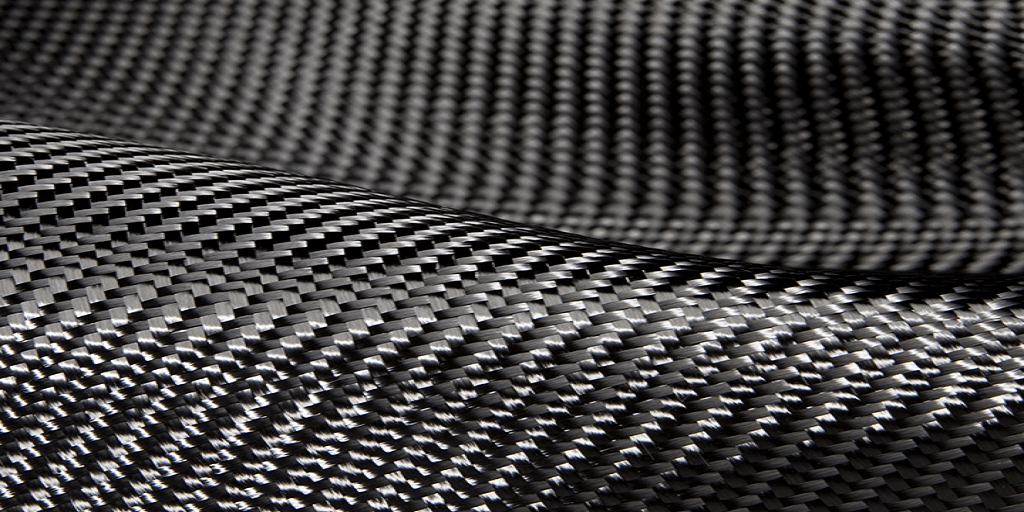
With every advancement that improves carbon fiber weaves and epoxy binding, carbon fiber only increases in popularity. Carbon fiber sheets and scales have been used to create everything from knife handle scales to golf shafts and everything in between – some manufacturers have even produced lightweight, high-strength firearm barrels from carbon fiber matrices!
One of the greatest draws of carbon fiber is that, depending on its construction, it can exhibit impressive resistance to UV, or ultraviolet radiation.
What Is UV, Really?
Most people recognize UV, or ultraviolet light, as the “bad” radiation that can cause sunburn and skin cancer. More properly, UV light occupies a band of wavelengths just beneath the visible spectrum, from 100 to 400 nanometers, or μm. UVC, the shortest and most dangerous of these wavelengths, ranges from 100-280 μm, followed by UVB, from 280-315 μm, and finally by UVA, which lies between 315-400 μm.
In humans, overexposure to UV light can cause sunburn and photokeratitis, and even skin cancer, but the bad news is that UV light isn’t just bad for the skin; it breaks down complex organic polymers, which means that some materials left out in the sun will break down over time.
Complex organic molecules such as those found in wood, leather, rubber, and even in synthetics can be irreversibly damaged through a process known as photochemical depolymerization.
Why Are Carbon Fiber Sheets UV-Resistant and Why Does It Matter?
Carbon fiber is woven into fabrics and saturated with epoxies to create carbon fiber sheets; the good news is that carbon fiber itself does not react to ultraviolet light. The carbon fibers themselves are impervious to ultraviolet radiation as their chemical composition is so simple that UV light does not rearrange it. This makes carbon fiber materials highly valuable for creating tools, structures, and products that will be used or housed outdoors.
Some carbon fiber sheets are susceptible to UV light – but not the carbon fibers themselves, rather the resin epoxy. Over time, exposure to UV light can depolymerize the epoxy resins used to bind them. However, some carbon fiber plates, sheets and composites utilize a UV-resistant epoxy resin, making them much more suitable for outdoor applications.
Why Else Are Carbon Fiber Sheets Valuable?
Carbon fiber is also noteworthy because it possesses a wide range of other beneficial attributes. In addition to fact that it can be made UV-resistant with the proper epoxy coating and treatment, it is exceptionally lightweight and strong. Carbon fiber also:
– Has a low thermal expansion compared to most metals, diminishing thermal stress?
– Is remarkably resistant to corrosion (also in contrast to many metals alloys like copper and steel)
– Has high electrical conductivity, making them valuable for electrical work.
– Is surprisingly durable and resistant to wear and fatigue.
This unique portfolio of attributes has rendered carbon fiber a suitable material for a wide range of applications, including but not limited to:
– Consumer goods like knife scales, glasses frames, and phone cases.
– Sporting goods, such as tennis rackets, baseball bats, and even arrows.
– Engineering applications, such as in the design of aircraft and automobiles.
– And much more.
To learn more about carbon fiber, its uses, or how it can be made UV-resistant, get in touch with the experts online at ProtechComposites.com or by calling their customer service team at 360-573-7800!
