
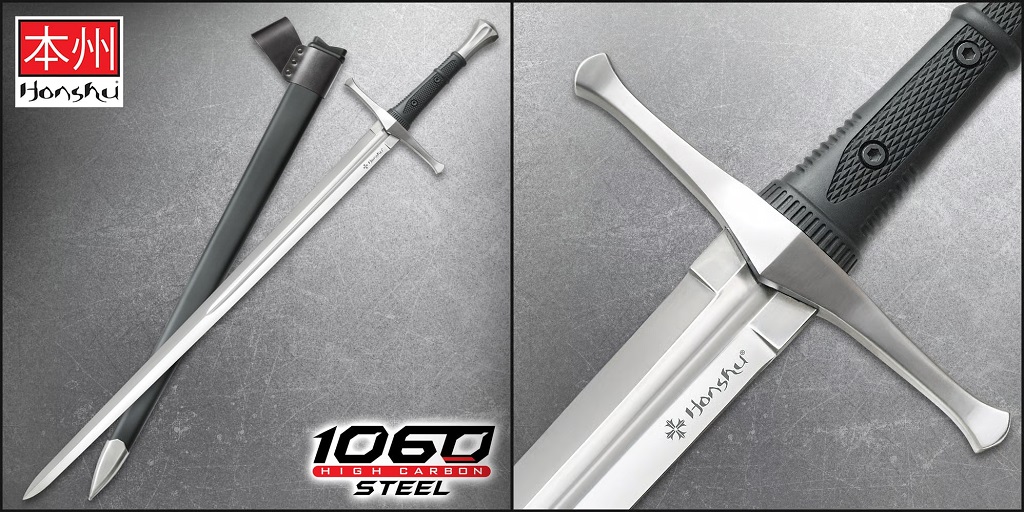
Viking sword are among the most coveted of archeological artifacts for anthropologists studying Norse culture, and they are equally desirable among collectors and others who simply like cool things. Here are 9 interesting facts about them; see if you know any.
Viking Swords Are Also Known by Other Names
Viking swords are also called Norman swords and Carolingian swords; they may also be known by more specific typology or nomenclature.
They’re Characterized by Their Pommels
One of the most defining features of a Viking sword is the pommel, which was typically lobed with an odd number, either three or five, though single-lobed Norman swords also exist. The lobes were commonly lozenge or nut-shaped.
Viking Swords Were Intended to Be Used One-Handed
Viking swords are characterized by a short hilt that could only accommodate one hand, and were intended to be used single-handedly. They were smaller and lighter than many other sword patterns, making them agile and swift in the grip.
The Term “Blood Groove” Is a Misnomer and a Misconception
Many Viking swords feature a groove down the center known as a fuller, which is added to remove steel from the blade, lightening it. Occasionally the presence of a fuller can also stiffen and strengthen the blade.
However, there is a common misconception around this feature; it is sometimes called a “blood groove” and paired with the false rationale that it is included to allow the blood to let from an enemy.
Their Hilts Were Often Richly Decorated
Even if you couldn’t see the blade, you could likely identify a Viking sword just from the hilt. Often, the hilts of these swords were decorated with precious metal filigree, stones, or inscriptions or engravings.
The Hilt Ornamentation of Many Viking Swords Has Not Survived
Many Viking swords have been recovered from bogs, bodies of water, or from burial sites. The soft leather and wood trappings of their hilts have long since rotted away, leaving the decoration up to the imagination.
It’s Likely That Many Never Saw – or Were Even Intended for – Combat
These types of swords were often given as gifts and worn as status symbols or to communicate power. Many of them were forged for that very purpose and never intended to see battle.
A Unique Forging Process Yielded Steel That Was Both Aesthetically Intriguing and Strong
The smiths that made these swords used a unique process called “pattern welding” that involved forge welding multiple different strips or bars of iron together. This created a unique pattern in the steel not unlike Damascus, and also often yielded a steel that was both flexible and strong.
These Types of Swords Were Highly Versatile
Because they were short and light, these swords would have proven highly effective for both thrusting and slashing attacks, and would have been very nimble and responsive in the hand.
Here for an Authentic, Battle-Ready Viking Sword Replica?
Interested in adding a Viking sword replica to your collection? Visit True Swords. They carry a wide range of authentic and battle-ready sword replicas in their collection, many at very competitive prices.
For More Information About Rengoku Sword and Aragorn Sword Narsil Please Visit: True Swords.
