
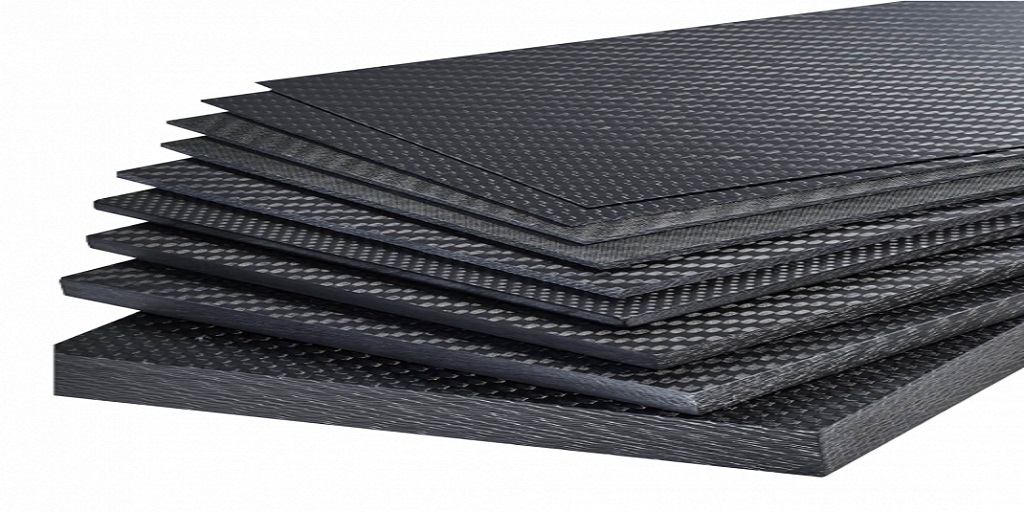
Carbon fiber has long been known to be an extremely durable and versatile material utilized in various industries today. Carbon fiber can be found in products of widely varying niches, from aerospace and automotives to sports equipment and manufactured toys.
What Is Carbon Fiber?
Carbon fiber is a synthetic fiber that is unique in its extreme strength, durability, rigidity, low weight, corrosion resistance, and various other properties. It is a material that boasts impressive amounts of positive attributes and very few negatives. Some positives, for example, include that it is ten times stronger than steel, 5 times lighter than steel, and 1.5 times lighter than aluminum.
Before purchasing and/or using carbon fibers in products, however, buyers need to understand the terminology of carbon fiber so they get the right type for their specific applications. That’s why we have compiled a list of the six most common terms used in carbon fiber.
1. Veneer
Carbon fiber veneer is essentially a very thin carbon fiber sheet that is placed on an existing surface to upgrade its look. Carbon fiber veneers are made up of just one layer of carbon fiber fabric in contrast to the many layers of thicker sheets. Because veneers can simply be attached to a surface, they are an easier, more affordable way to create a carbon fiber look without having to purchase an entire carbon fiber piece. Appearance of the weave and level of finish of veneers can vary considerably among manufacturers. High-quality options, like those at Protech Composites, are more glossy.
2. Weave
Carbon fibers are woven together and can be done so by several methods, but typically by these three most popular ways: plain weaves, twill weaves, and harness satin weaves. Plain weaves are the typical “over, under” weaving pattern. Twill weaves are “over 2, under 1” and come in 2×2 or 4×4 patterns. Lastly, the harness satin weaves are those used for items that need to be contours around more complex objects.
3. Tow
Carbon fibers are more often than not woven into fabrics, which are first done by creating bundles of these fibers called tows. Tows are rated on their number of carbon filaments. You will often see tows referred to like 3K, 6K, 12K, and 15K. The “K” stands for thousand and, depending on this number, means how many carbon filaments are used (3,000, 6,000, and so on).
4. Thickness
“Thickness,” as you might have already guessed, is the thickness of the carbon fiber product, but it still is relevant and important to take note of when purchasing carbon fiber. Carbon fiber plates, for one instance, come in a few sizes in terms of thickness, from 0.010” (0.25mm) to 1.00” (25.4mm).
5. Specific Strength
The specific strength is more simply the ratio between strength and weight. The specific strength of carbon fiber is the best out of all other materials! It is a whopping 2457 (meaning it has exceptionally high strength and low weight) while aluminum alloy, for one example, is only 254.
6. Modulus
Modulus is the quantification of an elastic material’s stiffness. Carbon fiber has an excellent modulus, which is usually 33 msi or 228 GPa.
However, this number greatly varies depending on numerous factors, including the weave used, the number of tows, and much more. The higher modulus doesn’t always mean higher quality, it should be said. For example, if you’re looking for something that is more affordable and still has optimal tensile strength, you may want to choose a carbon fiber with a lower modulus.
When it comes to your business and the products you create, you need the best material around– and that includes carbon fiber. If you are looking for the most high-quality options around, trust no one else but Protech Composites. Their products contain no voids or porosity, and they don’t use any cheap processes (including when creating carbon fiber veneers).
Browse their carbon fiber offerings or give them a call at 360-573-7800 today!