
When you need to drive deep holes into your piece, there are certain rules you need to follow if you want it to stay true to print. Many elements must be considered in hole-making applications: material, presetting, coolant, chip load, and tool material are among the many factors that will ultimately impact the final product.
Pay Attention To The Chip
Drill performance is often measured by chip formation. When cutting certain materials, we generally want our chips to be shaped in “sixes and nines” as their curly form allows them to dissipate heat more efficiently than, say, long and stringy chips that are not as efficient in carrying heat away from the cutting zone. Stringy chips usually mean that our feed rate is too low. In this case, we need to increase feed rates so our tool can break the material instead of peeling it away.
Another factor that could yield vital clues about our tool performance is the color of the chips. The hotter our work zone, the more discolored the chips. When we notice that chips are turning gray or dull-colored, it is time to reduce our RPMs.
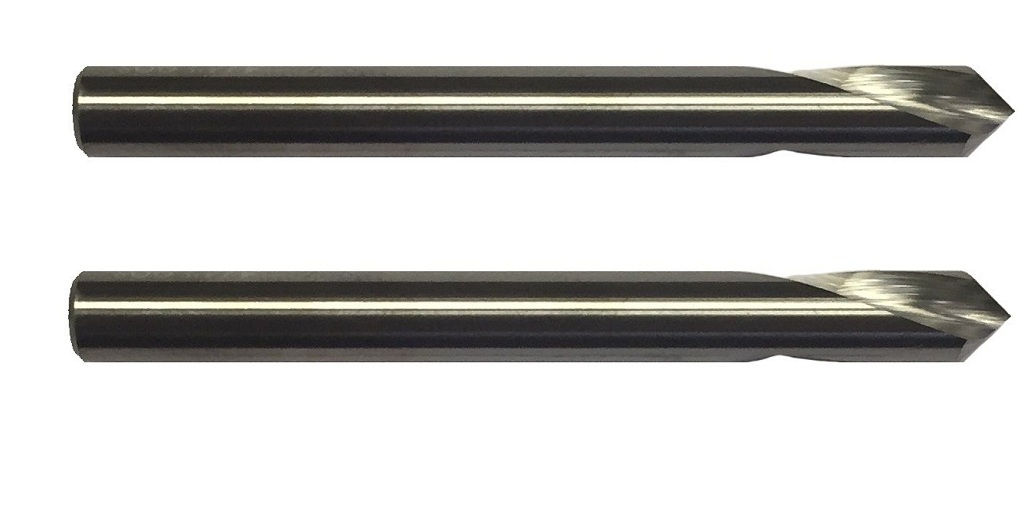
A way to address discolored chip nests is to improve lubricity and efficiently remove heat by using water-soluble or oil-based coolants. When it comes to improving our spot drills, carbide can greatly increase heat resistance and durability.
It is important to remember that small spot drills require increased coolant pressure to help evacuate chips faster so they can keep material removal speed at optimal levels.
Always Preset
The first thing we should do before we start plunging our tool is presetting. Many operations still require climbing into work zones to fiddle with indicators or even holding pieces of paper in place as a way to give some touch-offs to the tool. These generally happen because there are no presetting processes in place, giving way to incorrect setup measurements and thousands of accumulated downtime hours.
When setting tools on the machining line, the process might eat up to 30 minutes. This represents an hour and a half lost every day, or 2,200 a year, in a shop that operates 24/7.
A presetter makes finding drill margins a breeze, taking less than 10 minutes in the tool room instead of having to work on the machining line.
Avoid Pecking
While pecking is still a standard technique in many workshops, it generally means that the operator might be using the wrong tool or does not know how to use it. Pecking, or reversing your spot drill´s feed during the cut to evacuate the chips, makes the whole operation painfully slow. Pecking also causes other problems such as leaving undetached chips inside the hole or causing the internal surface to be jagged and inconsistent.
High-performance tools, like spot drills made of carbide, are extremely wear-resistant, allowing for more aggressive feed rates that can take on harder materials with less or no pecking at all.
Of course, you need carbide tools specifically made to increase efficiency and accuracy. Online Carbide is a CNC tool supplier that manufactures high-performance carbide spot drills and mills for workshops that need to increase their part production while reducing costs. Visit their website today and find out more about their products.
