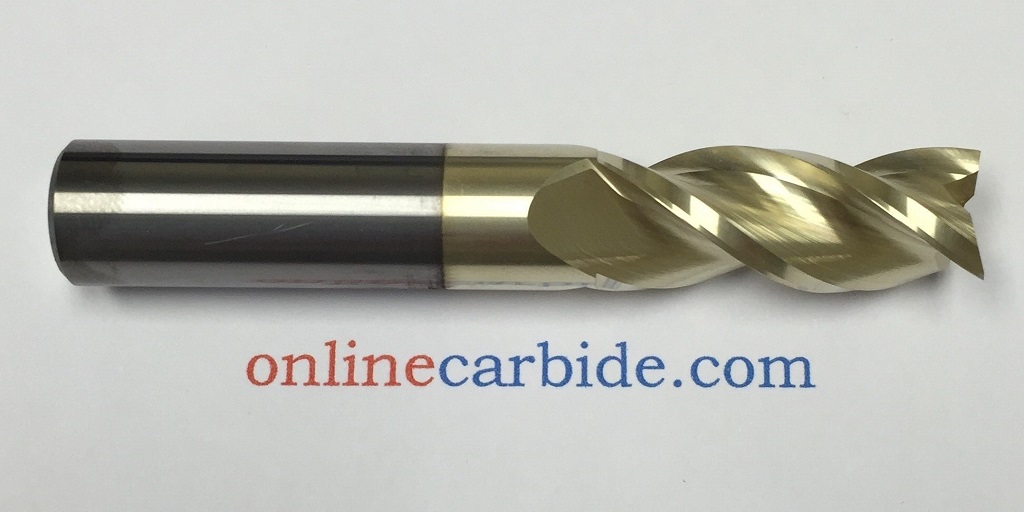
Milling and cutting tools are subject to incredible forces. Drill bits, end mills, spot drills, and other cutting tools usually found in milling machines all operate at high speeds. Moreover, due to the adoption of more aggressive tool paths, feed rates today put cutting tools to the test causing intense fatigue. This is especially true when machining harder materials such as stainless steel or non-ferrous alloys.
High-performance machining operations that require high material removal rates heavily depend on the quality of their tools as both part quality and tool replacement rates impact productivity.
Generally, shops face two options when it comes to milling cutters: steel and carbide cutting tools. Let’s see the main differences between the two.
Steel Cutting Tools
The combination of iron ore with small quantities of carbon has been one of the pillars of modern civilization. This amazing alloy combines the hardness of metal with added tensile strength thanks to carbon molecules. Steel is very strong and can be forged to a very high degree of sharpness, making it perfect for cutting. Additionally, steel is extremely affordable, making it extensively available for many processes in the manufacturing industry.
However, when compared with other materials, steel shows some relative limitations that have made many machinists steer away from it and favor stronger cutting tool options. Some of these limitations are due to the very nature of steel.
In order to harden steel, the metal must be heated, molded, and quenched to reach maximum strength. This is what gives steel its hardness but also makes it malleable enough to create incredibly sharp edges. The problem is that the temperature necessary to make steel malleable is relatively low. It means that high speeds will drive your steel cutting tool´s temperature right to the point where it starts to soften again, drastically reducing tool life.
Moreover, the natural flexibility of steel causes it to vibrate or wobble when driven at high speeds. This is detrimental for accuracy, especially when you need to start holes and want to prevent hole misalignments.
Carbide Cutting Tools
Composite materials provide different properties not present in metallic alloys. The reason is that their components never form a solution. Their ingredients retain their independent properties but work as aggregates. Carbide is a ceramic powder. Each granule of carbide is incredibly rigid and dense, but they need to be bound together in order to harness its cutting power. Cobalt metal serves as the cement that binds these carbide granules and holds them in place. Together, they form one of the hardest materials in the machining industry.
Carbide is ten times harder than steel. It means that it provides a lot more wear resistance and is able to hold its sharpness longer. It is also more rigid, meaning that it offers enhanced accuracy for holemaking tasks and gives machinists higher chances of staying true to print.
Moreover, carbide is incredibly more capable of withstanding high temperatures. This not only means increased durability, but also that it can be driven at higher speeds and more aggressively than steel, making short work of hard-to-machine materials such as stainless steel, titanium alloys, INCONEL, and many more. This is the basis of today´s high-performance machining practices as they not only demand higher feed rates and precision, but also need to reduce costs in terms of tool cycling and stability.
Online Carbide is a carbide cutting tool manufacturer and supplier specialized in furnishing high-performance workshops with the best tools for machining. They are an American company so you can be sure their products comply with the highest standards of quality, and they offer incredible prices by cutting the middlemen. Visit their store today or contact them at [email protected].