
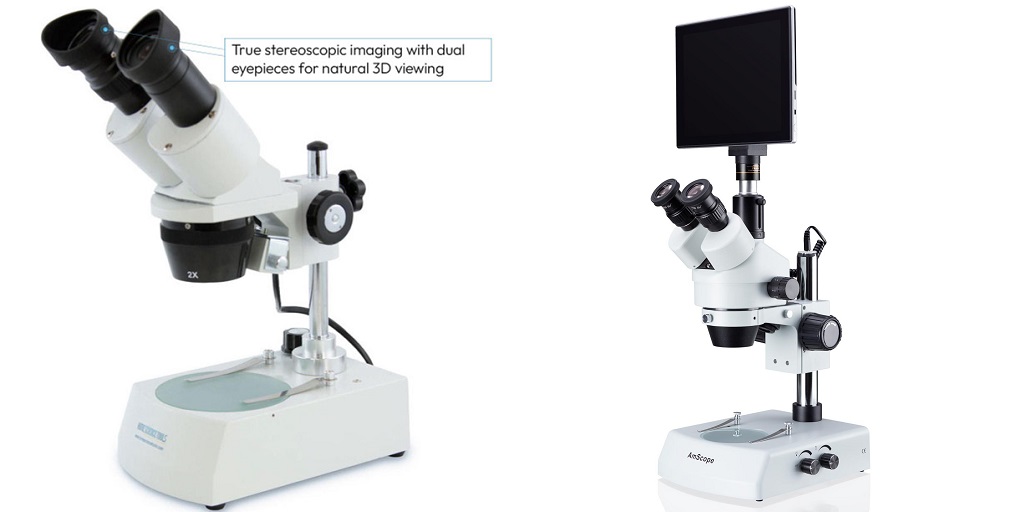
Most parents remember biology class as a world of flat images and transparent cells, but a dissecting microscope offers a much more tactile experience. Instead of squinting at tiny dots on a slide, this tool allows your child to see the world as it actually exists: in full, glorious 3D. For families looking to spark a love for science, it is perhaps the most accessible and rewarding instrument you can bring into your home.
Whether revealing the intricate patterns of a butterfly wing or the shimmer of a rock crystal, the stereo microscope transforms simple observation into a vivid, hands-on scientific journey for learners of all ages.
What Is a Dissecting Microscope?
To understand how it works, imagine a high-powered magnifying glass that uses two separate paths of light. This “stereo” vision is what creates the 3D effect, allowing your child to perceive the height, depth, and texture of whatever they are studying.
One of the greatest advantages for parents is the lack of “prep work.” There is no need for sharp scalpels or messy chemical stains. You simply place an object on the base and adjust the focus. This ease of use encourages spontaneous learning; if your child finds an interesting beetle or a unique pebble during a walk, they can be observing its hidden details within seconds of walking through the door.
Whether your child is fascinated by shimmering crystals, backyard insects, or the hidden world in a drop of pond water, a stereo microscope brings multiple scientific topics to life. It’s more than just a tool; it serves as a versatile investment that bridges the gap between classroom theory and hands-on discovery, making it an essential cornerstone for any robust homeschool science curriculum.”
Specimen Ideas for Your Home Science Lab
The stereo microscope is a versatile tool that fits perfectly into any nature study. Consider these ideas for your next hands-on lesson:
- Entomology (insects): Highlighting antennae, wings, and legs to help kids visualize how insects move and sense their environment.
- Botany (plants): Studying leaf pores, stems, and root hairs to understand plant physiology.
- Earth Science (rocks & crystals): Comparing textures and crystal formations to learn about geological processes.
- Marine Biology (shells & fossils): Analyzing the growth rings on shells or the preservation of ancient life in fossils.
- Material Science (everyday objects): Investigating hair strands, sand grains, or currency to show that science is present in every household item.
Benefits Beyond the Lens: Building a Scientific Mindset
More than just a fascinating glimpse into the micro-world, the dissecting microscope is a significant catalyst for cognitive growth. It is a tool that instructs children in the skill of meticulous observation.
It also serves as a link between casual play and academic learning. When a child uses tweezers to turn over a leaf under the lens, they are developing fine motor skills and spatial awareness. Most importantly, it shifts the role of the child from a passive consumer of information to an active investigator. They aren’t just reading about science; they are performing it.
How to Get the Most Out of Your Home Lab
To keep the momentum going, set up a dedicated “Discovery Station.” Keep a field journal nearby so your child can sketch what they see. This helps solidify their observations and improves memory retention.
Exploring the microscopic world is a journey that starts with the right tools. Home Science Tools offers a range of dissecting microscopes specifically designed for children aged 8 and up. These instruments are crafted to be durable and easy to use, providing the perfect spark to ignite a lifelong passion for discovery in homeschooling students.
